
Pruning apple trees effectively is essential for small space gardeners struggling with low fruit yields. By implementing targeted pruning strategies, these gardeners can optimize light exposure and improve air circulation. This process not only enhances fruit size but also minimizes competition among branches for nutrients.
Understanding the timing, tools, and techniques involved can greatly impact the overall health and productivity of the trees. Exploring these aspects further reveals critical insights for maximizing yields in limited spaces.
Key Takeaways
- Pruning during dormancy enhances visibility of tree structure, allowing for strategic cuts that improve light penetration and airflow.
- Removing overcrowded or diseased branches promotes healthier growth and larger fruit production in limited spaces.
- Thinning fruit clusters prevents overcrowding, ensuring that remaining fruits grow larger and healthier in small gardens.
- Regular inspections for pests and diseases during pruning help maintain tree health, directly impacting fruit yield.
- Utilizing proper tools and techniques ensures clean cuts, reducing stress on the tree and fostering optimal growth conditions.
Essential Apple Tree Pruning Tips for Maximizing Yield
Pruning apple trees effectively can greatly enhance fruit yield, especially for small space gardeners facing challenges. Key apple tree pruning tips include selecting the right time, typically late winter or early spring, when trees are dormant. Gardeners should focus on removing dead, diseased, or overcrowded branches to improve sunlight penetration and air circulation.
Maintaining a central leader structure encourages upward growth, optimizing space and fruit production. Additionally, thinning fruit clusters can prevent overcrowding, allowing remaining apples to grow larger. Regularly inspecting for pests and diseases is vital, as early detection can mitigate losses. Implementing these essential apple tree pruning tips fosters a productive environment, ensuring that small space gardeners can enjoy bountiful harvests despite limited growing areas.
Avoid These Common Apple Tree Pruning Mistakes
While many small space gardeners aim to enhance their apple tree yields through pruning, several common mistakes can hinder progress. Understanding these pitfalls can greatly improve the effectiveness of apple tree pruning tips.
- Pruning at the wrong time: Timing is vital for ideal growth.
- Removing too much foliage: Excessive cutting can stress the tree.
- Neglecting to clean tools: Dirty tools can spread diseases.
- Ignoring tree shape: Maintaining a balanced structure is essential for light penetration.
- Overlooking water and nutrient needs: Pruning should coincide with proper care.
When to Prune Apple Trees?
Timing plays an essential role in the successful pruning of apple trees, particularly for small space gardeners aiming to maximize fruit yields. The ideal time for pruning is during late winter to early spring, before new growth begins and while the tree is still dormant. This period, typically from February to March, minimizes stress on the tree and reduces the risk of disease.
Pruning during this time allows for better visibility of the tree’s structure, facilitating more effective cuts. Additionally, avoiding summer pruning is advisable, as it can lead to excessive sap loss and weakened branches. By adhering to these timing guidelines, small space gardeners can enhance their apple trees’ productivity through well-timed, strategic pruning efforts.
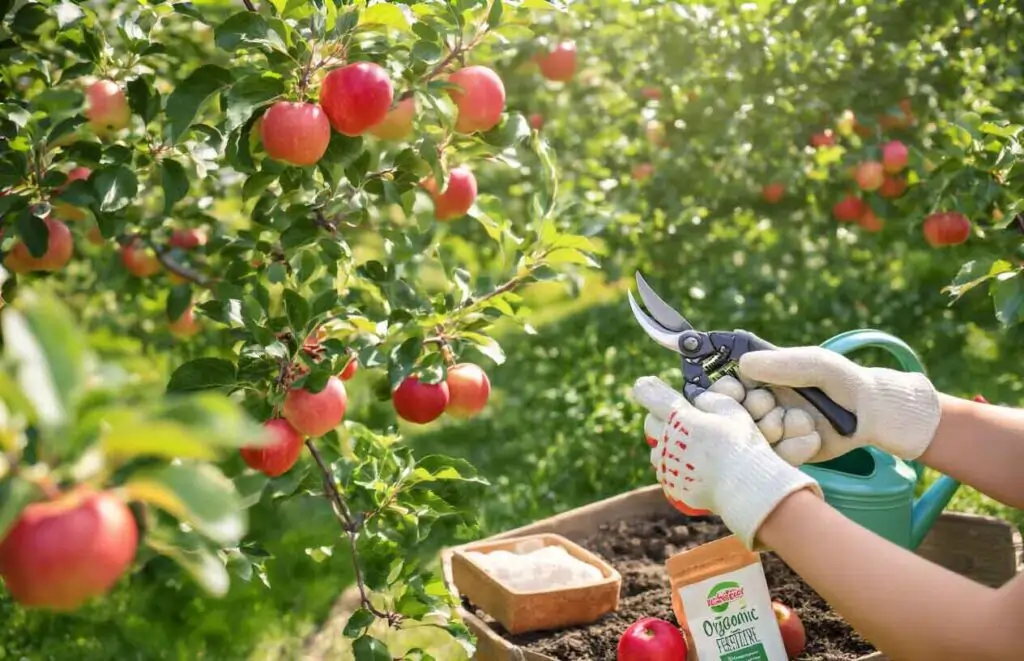
Tools and Techniques for Effective Apple Tree Pruning
Successful apple tree pruning requires the right tools and techniques to achieve ideal results. Gardeners in small spaces can enhance their yields by utilizing specific equipment and methods tailored for effective pruning.
- Pruning Shears: Essential for clean cuts on small branches.
- Loppers: Ideal for thicker branches, providing leverage and reach.
- Saw: A small handsaw is useful for larger limbs.
- Gloves: Protect hands from cuts and sap.
- Safety Glasses: Guarantee eye protection while working.
Incorporating these tools, along with techniques such as thinning and shaping, allows for better light penetration and air circulation. Mastering these apple tree pruning tips not only improves tree health but also fosters a sense of community among gardeners aiming for fruitful harvests.
Common Reasons for Low Apple Tree Yields in Small Gardens
Low apple tree yields in small gardens can often be attributed to a variety of factors that directly affect fruit production. Insufficient sunlight, typically due to nearby structures or trees, can hinder photosynthesis, essential for fruit development. Poor soil quality may lack the necessary nutrients, impacting tree health and yield. Additionally, inadequate watering practices can lead to stress, causing trees to produce fewer fruits.
Pest infestations and diseases, if left unchecked, can also diminish yield potential. Finally, improper pruning techniques may result in overcrowded branches, limiting airflow and light penetration. Understanding these common issues allows small space gardeners to apply targeted apple tree pruning tips, fostering improved fruit yield and healthier trees.
Frequently Asked Questions
Can I Prune My Apple Tree in Winter?
Pruning apple trees in winter is generally recommended, as it encourages healthy growth and improves air circulation. However, gardeners should guarantee temperatures are consistently below freezing to prevent potential damage to the tree.
How Often Should I Prune Apple Trees?
Apple trees should be pruned annually, ideally during dormancy in late winter or early spring. This regular maintenance encourages healthy growth, enhances fruit production, and maintains the tree’s shape, benefiting gardeners in small spaces.
What Varieties of Apple Trees Are Best for Small Spaces?
Dwarf and semi-dwarf apple tree varieties, such as ‘Honeycrisp’ and ‘Fuji,’ are ideal for small spaces. Their compact growth allows for efficient pruning and greater fruit production, making them suitable for urban gardeners seeking bountiful harvests.
Will Pruning Affect the Tree’s Health Long-Term?
Pruning, when done correctly, can enhance an apple tree’s long-term health by promoting airflow and sunlight penetration, reducing disease risk. Proper techniques guarantee balanced growth and improved fruit yield, making it beneficial for small space gardeners.
Can I Use Regular Garden Tools for Pruning Apple Trees?
Regular garden tools can be used for pruning apple trees, but specialized tools like pruning shears and loppers provide cleaner cuts, promoting tree health and improving fruit yield. Proper equipment enhances the effectiveness of apple tree pruning tips.
Conclusion
In summary, effective apple tree pruning is vital for small space gardeners seeking to address low fruit yields. By implementing strategic pruning techniques and avoiding common mistakes, gardeners can enhance sunlight exposure and air circulation, leading to healthier trees and improved fruit quality.
Proper timing and the use of appropriate tools further guarantee the trees remain disease-free. By understanding and applying these essential pruning tips, small space gardeners can ultimately achieve a bountiful apple harvest.
You May Also Like To Read: